Florida Author Robert Buccellato
Rumrunners and Moonshiners of Old Florida was published in January 2019. Travel back to one of the most colorful and captivating periods of Florida history, a time when the rebellious spirit of Old Florida challenged the federal government. It was a time when Prohibition ended legal production of spirits and ordinary citizens turned to a life of crime. The book contains a great deal of images on all aspects of illegal production and distribution of liquor in Florida during the 1900s. It also features a wealth of interviews and anecdotes about life in the period from those who lived through it. It is not a lengthy study of the causes of prohibition, but it is a fun, brief photo book about the great state of Florida that shines a light on a forgotten time of bootlegged liquors, corrupt rural sheriffs, crafty moonshiners, and panhandle traditions that go back centuries.
Robert Buccellato is the author of Florida Governors Lasting Legacies, Jimmy Carter in Plains The Presedential Hometown, Finding Dan McCarthy, and Rumrunners and Moonshiners of Old Florida. Buccellato was the Historian for the Clerk of Courts for Leon County, a position created for him, between 2015-17. In 2017, Buccellato was appointed by Tallahassee Mayor Andrew Gillum to the Canopy Roads Advisory Committee.
Buccellato lives in Tallahassee with his wife and their children. buccellato headshot
He will be at Headquarters Library to present his book on Saturday, March 16 at 2:30 pm in the Foundation Room
link below for details
https://www.aclib.us/books/blog/florida-author-robert-buccellato
Showing posts with label book. Show all posts
Showing posts with label book. Show all posts
Wednesday, March 13, 2019

Tuesday, February 19, 2019
Rum Runners and Moonshiners Now Available for Purchase

Foreword by Kartik Krishnaiyer
It’s difficult for modern Floridians to conceive what prohibition was like, even with dry counties in the parts of the state persisting into this millennium. It's difficult also for many in our state to really grasp how important this era was, and how much this bustling, modern mega-state was defined by the shadows of the 1920's.
Splits between wets and dries characterized political and societal life throughout the nation. Florida was no different but as a southern, largely religious state people’s entire life and ideology were defined by if they were wets or dries. At the beginning of the era the state’s population was skewed toward the northern part of the peninsula, which was known as the Panhandle, and where dries dominated. But by the end of the prohibition era, the state was much more balanced with huge growth in the south where wets were more prevalent. This created a unique tug of war throughout the state. Florida’s willingness to allow local municipalities to implement prohibition long before the Volstead Act passed made it a contentious issue that divided Floridians in a state that was rapidly changing. For three decades people’s entire life and ideology were defined by if they were wets or dries.
Urbanization and immigration were leading triggers on the move for prohibition throughout the country. A fear of outsiders and a loss of simple agrarian life that was being corrupted by the bottle and vices that come with alcohol were leading justifications for dry movements that sprung up throughout the late 1800’s and early 1900’s.

Carry Nation the country’s leading prohibitionist activist visited Florida in 1908 touring the state. Nation’s impact was profound - politicians joined her call for prohibition as did many housewives and non-political activist types. Nation’s visit helped many local municipalities push through ordinances making towns, cities and counties “dry” before the Volstead Act imposed prohibition nationally. The impact of Nation in many small towns was pronounced. Making areas “dry” became the sole political issue in many places as early as the 1908 election.
In one-party Florida, as with the rest of the south, politics would fall upon tribal or single-issue lines. From the late 1910’s until the last 1920’s the most important issues in the south were related to prohibition and race. Often being soft on prohibition implied a certain liberalism on race and immigration in the eyes of those who were prohibitionists. But ethnic diversity was coming to Florida and the prohibition era captivated this.
In 1916, as prohibition was becoming the dominant domestic issue particularly in rural areas Sidney Catts was elected Governor of Florida after being denied the Democratic nomination in a recount. Catts secured the nomination of the Prohibition Party and was elected. Catts talked extensively about political & bureaucratic reform and married that rhetoric with anti-Catholicism and overt racism. Catts electoral success showed the ability of someone associated with being “dry” to buck the established Bourbon Democratic Party establishment and get elected. Catts showed how popular prohibition was among rural conservatives. Catts though a registered Democrat was the only person running on a line other than the Democratic one to win the Governorship between Reconstruction and the 1960s.

Catts’ victory led the legislature to impose a form of prohibition statewide BEFORE the Volstead Act was passed. While Florida’s governing northern rural counties remained dry and conservative in this period for the most part other parts of the state, far-flung from the centers of power in the 1910’s and 1920’s took a different approach.
Developments would soon after the imposition of state laws and the Volstead Act demonstrate how absurd a notion prohibition was in general for a state as large and diverse as Florida was becoming. With ethnic Italians and Cubans moving into the peninsular portion state, and Catholics in general nationally "wetter" than other groups, the landscape was changing forever in the Sunshine State. These fault lines which were becoming apparently politically in the late 1910’s would be exposed once and for all in the 1920’s. In an era before interstate highways and the Florida Turnpike, before jet airplanes, before the internet and television, communications were delayed and often limited between the northern rural areas which governed Florida and the south where prohibition was disdained.
Consistently tension in Florida politics and society in the early and mid-1900’s revolved between the rural north with most of its residents tracing their southern lineage to Georgia, Alabama, Mississippi or South Carolina with the rest of the state who was filling up with people from the north and even abroad was only beginning to percolate when prohibition was implemented. The Florida land boom coincided with prohibition and made the implementation of dry laws unrealistic beyond the small towns and rural conservative counties of the Panhandle and Big Bend.

A vast, sprawling peninsula lay below the areas where prohibition was popular and it became almost impossible for law enforcement officers to force the laws on those areas. Much like the Seminole’s and other native Americans who had fled south into the vast hinterland of the state to remain “unconquered,” bootleggers drifted to Florida, particularly the Miami/Fort Lauderdale area. Shootouts were common and law enforcement officials had very hard time tracking bootleggers. Meanwhile gambling became commonplace and levels of public corruption among elected officials and bureaucrats reached levels never seen in the state’s history. Law enforcement itself wasn’t immune and prostitution became more prevalent. It was an era that shaped much of the identity of South Florida and other parts of the state where prohibition was not welcomed by large portions of the population and businesses.
Just a few years earlier game wardens had filled up the region to try and prevent the illegal plume hunting - shootouts and general lawlessness followed until the trade in bird feathers dried up. But even that era seemed tame by comparison to what would happen on the Miami River and on the beaches of Miami and Fort Lauderdale in the 1920’s and early 1930’s.
Bootlegging was common as was the ability of pharmacists and others to “prescribe” medicine with high alcohol content. In the Tampa Bay area, rum-running and other forms of bootlegging were also common and with the wide areas of undeveloped wilderness surrounding Tampa, Miami and Fort Lauderdale in the 1920’s it was easy to set-up shop outside of town or near the water and do business wherever was needed. For law enforcement cracking down on such a trade proved futile even if the politicians and other interests behind prohibition couldn’t understand the circumstances which led the Florida peninsula to be among the wettest places in the country during the 1920’s.
In Robert Buccellato’s other works about the state we’ve seen the evolution of Florida from small town oriented and reactionary to urban mega state. In Finding Dan McCarty, Buccellato brilliantly articulates an era of Florida politics and growth where the counties of South Florida who were driving the state’s economic growth were in a tussle to wrestle political control away from the largely rural northern part of the state. This work can be considered a precursor to that book, a prequel if you like.

The elements for a modern Florida and the explosive growth in relevance of southern Florida were intertwined with prohibition. While the common themes of land speculation, draining of the Everglades and an automobile and plane infused tourist-boom are given credit for the shift in the state, the prohibition era played an important role.
Buccellato’s knowledge of Florida History is among the sharpest around. This period of Florida’s evolution hasn’t been appreciated enough as it played a critical role in crafting a state that was attractive for outsiders and ready to boom after World War II. This era helped make southeast Florida a more cosmopolitan melting pot than had been seen in the state’s history with migrants from the Northeast and Midwest as well as foreign immigrants. The Tampa area also grew similarly.
What came out of the prohibition era was a more diverse state and one whose population was changing. While it took the leadership of the state decades to understand the changes and adjust accordingly, everyday life in Florida outside the small rural towns of northern Florida was never the same. While prohibition was undoubtedly a mistake spurned by an era of anxiety towards urbanization and immigration, it shaped Florida for decades to come.
Now available for purchase
https://www.amazon.com/Rum-Runners-Moonshiners-Old-Florida/dp/1729616313
Monday, November 5, 2018
Rum Runners and Moonshiners of Old Florida
I'm so excited to present the official book cover to my new book "Rum Runners and Moonshiners of Old Florida"
Goes on sale the week of January 10th 2019.
Release date January 19th 2019 (The 100th Anniversary of the 18th amendment)
Special thanks to my brilliant wife Stephanie

Thursday, April 28, 2016
Florida Squeeze article Finding Dan McCarty
Our good friends at THE FLORIDA SQUEEZE are just too nice
here is a lovely little article they wrote about the book
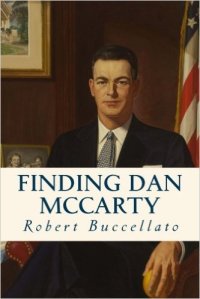
Finding Dan McCarty the new book by Robert Buccellato has been released and is available via Amazon.com (click on the link on the book title to purchase a copy). I’m honored to have contributed to this work writing a Forward which was about the 1940’s, 1950’s and 1960’s in Florida politics.
"A thin layer of glass separated him from the crowd; the endless stream of people walking past his open casket, glancing down at his lifeless face. His body lay resting inches from the main rotunda stairway where just a handful of years earlier he could be seen running up in a mix of energy and youthful vigor that would make him Florida’s youngest speaker and Governor. South Florida’s first Governor, a progressive who was also a realist, McCarty was now stricken by a heart attack. His policies now at the hands of his nemesis, the arch conservative Senate President Charley Johns. But fate and happenstance stepped in and allowed his state to flourish none the less. Finding Dan McCarty is a story about two very different men on similar journeys of personal and professional discovery. On the one hand is an Historian reaching out to the last members of this distant moment in Florida’s history to understand the life of a deceased politician, long hidden under a cloak of mystery. The other is a fallen Governor, who left behind in his wake a lasting legacy of achievement. A story which paints vivid portraits of McCarty’s many enemies, allies, and the historic events that formed the Governor’s thrilling brief life. Written by Robert Buccellato author of the acclaimed “Jimmy Carter in Plains.”
Wednesday, March 16, 2016
Author Interview from the Front Porch - Jimmy Carter In Plains
Here is my interview with the blog "From the Front Porch" the official podcast from the great south Georgia book store "The Book Shelf" of Thomasville.
mouse over the title and click Play. Open iTunes to download and subscribe to podcasts.
Description
Welcome to "From the Front Porch," a collection of conversations on books, small business, and life in the South. Each week, we share stories from the shop and happenings from our small town in South Georgia, all recorded from the comfort of Annie's front porch settled among the streets of downtown Thomasville. Follow along our adventures in store ownership, and eavesdrop into quirky conversations from our staff's day-to-day behind the counter. We'll introduce you to Thomasville's diverse cast of characters and share our favorite books of the season.
https://itunes.apple.com/us/podcast/from-the-front-porch/id906463114?mt=2
mouse over the title and click Play. Open iTunes to download and subscribe to podcasts.
Description
Welcome to "From the Front Porch," a collection of conversations on books, small business, and life in the South. Each week, we share stories from the shop and happenings from our small town in South Georgia, all recorded from the comfort of Annie's front porch settled among the streets of downtown Thomasville. Follow along our adventures in store ownership, and eavesdrop into quirky conversations from our staff's day-to-day behind the counter. We'll introduce you to Thomasville's diverse cast of characters and share our favorite books of the season.
https://itunes.apple.com/us/podcast/from-the-front-porch/id906463114?mt=2
Tuesday, January 26, 2016
Florida Squeeze Author Interview - Robert Buccellato

Heres the link
January 25, 2016 · by Kartik Krishnaiyer
Robert Buccellato the author of Florida Governors Lasting Legacies has penned another book this time about President Jimmy Carter and his hometown of Plains, Georgia. The new book Jimmy Carter in Plains: (Images of Modern America) is on sale now for release on February 1. The book is a unique look at the relationship between President Carter and his hometown. Exclusive photographs from Charles Plant in this book weave a motif of Carter and his family in the town of Plains. In a far ranging interview, Kartik Krishnaiyer sat down with the author to discuss Carter’s relationship with both his mother and father, his upbringing in segregationist South Georgia, his naval service and a discussion about how his retail politics honed in Plains helped him win the New Hampshire Primary in 1976 en route to the Presidency. We also discuss at length President Carter’s post White House life, his interactions with other members of the exclusive fraternity of US Presidents.
Monday, January 11, 2016
Book Blurb by Chris DeRose
I am deeply honored to receive this Book Blurb by the New York Times Bestselling author of "The President's war" and "Congressman Lincoln" Chris DeRose
Let me just go on record and say that he is one of the rising giants of mine generation, in terms of Non Fiction Authors, and it is a great joy to present this to you all
"I loved this book. Many presidents are associated with a place. Without understanding the place, you can't understand the president. Few presidents are tied to a place like Jimmy Carter is to Plains. Thanks to this excellent book, with its rare and fascinating photographs, we can now understand the small town that raised a president, and thus gain a greater understanding of the man."
Chris DeRose, New York Times bestselling author of "The Presidents' War."

Let me just go on record and say that he is one of the rising giants of mine generation, in terms of Non Fiction Authors, and it is a great joy to present this to you all
"I loved this book. Many presidents are associated with a place. Without understanding the place, you can't understand the president. Few presidents are tied to a place like Jimmy Carter is to Plains. Thanks to this excellent book, with its rare and fascinating photographs, we can now understand the small town that raised a president, and thus gain a greater understanding of the man."
Chris DeRose, New York Times bestselling author of "The Presidents' War."
Wednesday, December 30, 2015
Jimmy Carter Promos - Reviews
The reviews are in and the book has been very well received
over half of its first edition has already been purchased
be sure to pre-order your copy now on Amazon, Books a Million, Barnes and Noble, or The Arcadia Website to name a few.
Thursday, December 17, 2015
Book Review by Mary E Stuckey

The following book blurb was provided by the Great author Mary e Stuckley. Author of jimmy carter human rights and the national agenda, The Good Neighbor, and defining Americans to name a few.
As a presidential candidate and as president, Jimmy Carter remained a man of the South, deeply rooted in his hometown of Plains, Georgia. In this lovely pictorial history, Robert Buccellato brings the Carter campaign and its profound and continuing relationship to Plains vividly to life. In photos of the Carters, their campaign staff, the campaign itself, and the ways in which all of these continue to be commemorated in Plains, this book contributes to our understanding of Americana, political campaigns, small-town Southern life, and the Carter presidency.
Friday, December 11, 2015
Robert Buccellato on the Chris Hahn Show
Based out of New York, the Chris Hahn Radio show is one of the leading Progressive news programs in the nation.
Here is a link to the interview which starts at minute 52
http://christopherhahn.com/

Here is a link to the interview which starts at minute 52
http://christopherhahn.com/
Friday, December 4, 2015
The Star Wars Holiday Special
I know I know may seem a bit out of place to talk about a star wars special on a blog for a book about Jimmy Carter. However any Carter fan worth their salt will know that a giant poster of Star Wars graces the halls of the Jimmy Carter Presidential library. Not to mention the fact that the movies came out during the Carter Presidency and the New star wars movie that is just days away from rocking our world.
Plus, its my blog and I can do what I want. Its not like anyone reads it anyways. Now heres a bit of back story info for you, that I told painstakingly took from Wikipedia
The Star Wars Holiday Special is a 1978 American television film set in the Star Wars galaxy. It stars the film's main cast while introducing the character Boba Fett, who would appear in later films. It is one of the first official Star Wars spin-offs, and was directed by Steve Binder. The show was broadcast in its entirety only once, in the United States, on Friday, November 17, 1978 (the week before Thanksgiving[1]), on the U.S. television network CBS from 8:00 pm to 10:00 pm, Eastern Standard Time (EST), pre-empting Wonder Woman and The Incredible Hulk; and on the Canadian television network CTV from 7:00 pm to 9:00 pm, Eastern Standard Time.It was also broadcast in New Zealand on TVNZ and in Australia on the Seven Network.
Now here is the beautiful thing about this shit salad of a holiday special, it was created as a shameless way to cash in on the Star Wars mania taking hold of the nation at the time. It has nearly every major actor from the movie (no amount of money could have gotten them Guinness) and there is at least ten minutes worth of footage from the movie in this "special"
So you would think that given the level of involvement, everyone would have to embrace it. Nope!!! George Lucas acts like it doesn't exist and the Star Wars Fandom love to hate it. Anyway I mention all of this because its Christmas and Man I really need some Star Wars love today.
So I know this is terrible and believe me no one would argue that. I think Carrie FIsher was drunk during its creation. The guy who played C-3PO apparently has to be piss drunk to stand watching it. But there is a lovely 1970s lameness about it. Kinda like all those terrible Epcot rides that are now closed
anyway google it and enjoy
or you could do what I did and just watch this review instead
https://www.youtube.com/watch?v=oS6PwQcCIXo
Monday, November 23, 2015
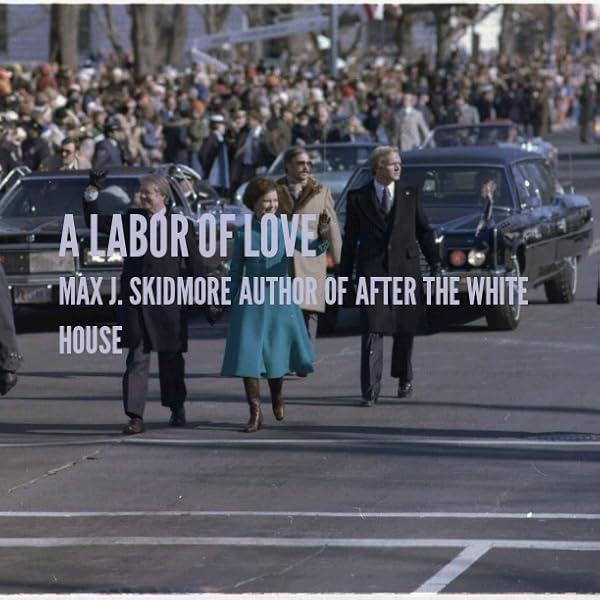
Jimmy Carter in Plains book review by Max J. Skidmore
Visual representations of politics in America are too often ephemeral,
taking the form of campaign literature that quickly vanishes, or news
reports that do not last beyond the headlines. Robert Buccellato, in what
obviously was a labor of love, has produced something different. His
presentation in pictures of the political life of President Carter before
and during his presidency should be welcomed by general readers who are
interested American presidents. Perhaps more important, these pictures
offer unique insights, making this book a contribution to American Studies
and to presidential history.
Max J. Skidmore
Author of After the White House: Former Presidents as Private Citizens
Jimmy Carter in Plains New Book Cover
 |
| I love this new cover for the book which is available for pre order on Amazon, Barnes and Noble, and Books a Million |
Radio interview on the Chris Hahn Show
Based out of New York, the Chris Hahn Radio show is one of the leading Progressive news programs in the nation.
Here is a link to the interview which starts at minute 52
http://christopherhahn.com/
Friday, November 20, 2015
Pre order Jimmy Carter In Plains The Presidential Hometown
You can know Pre-order the new Book Jimmy Carter In Plains The Presidential Hometown
Heres the link on Amazon
http://www.amazon.com/Jimmy-Carter-Plains-Images-America/dp/146711541X/ref=asap_bc?ie=UTF8
Barnes and Noble
http://www.barnesandnoble.com/s/%22Robert%20Buccellato%22?Ns=P_Sales_Rank&Ntk=P_key_Contributor_List&Ntx=mode%20matchall
and Books a Million
http://www.booksamillion.com/p/Jimmy-Carter-Plains/Robert-Buccellato/9781467115414?id=6454813405753
Heres the link on Amazon
http://www.amazon.com/Jimmy-Carter-Plains-Images-America/dp/146711541X/ref=asap_bc?ie=UTF8
Barnes and Noble
http://www.barnesandnoble.com/s/%22Robert%20Buccellato%22?Ns=P_Sales_Rank&Ntk=P_key_Contributor_List&Ntx=mode%20matchall
and Books a Million
http://www.booksamillion.com/p/Jimmy-Carter-Plains/Robert-Buccellato/9781467115414?id=6454813405753
Jimmy Carter in Plains Book Promo
A small video promo I made for the new book Jimmy Carter In Plains
out February 1st
https://www.youtube.com/watch?v=6mdjo65xH2k
out February 1st
https://www.youtube.com/watch?v=6mdjo65xH2k
Plains Ga Train Depot
There is a historical pull to this place and it's become manifested in the tiny green and white painted train depot at the center of town. For myself, this humble structure has always held such romantic attachment. This was where Jimmy Carter pulled it off. Where he, along with his neighbors and family staged the most improvable and captivating Presidential campaign in history, forever changing the political landscape of the nation and how we pick our presidential nominees.
The town's train depot was constructed in 1888 and was, for a time, the only building with a public bathroom. This was the primary reason for its selection as the hometown headquarters for the Carter Presidential campaign. It was the site of numerous hometown primary parties and was where candidate Carter would hold interviews whenever in town. As the 1970s dawned, Plains remained largely unchanged. But, following his announcement for president, the entire landscape of the community began to change. The primary night parties would begin at the depot and quickly took on a church potluck atmosphere. There were said to have been rows of flatbed trucks everywhere and tiny campers.
Once you enter the depot, long devoid of frequent activity, a single video can be heard echoing throughout the building. It is a video that Charles Plant put together on the 1976 election. The images are old and the voices heard are those that use to fill the television screens in countless homes decades earlier. The nightly news anchors of the past; Cronkite, Harry Reasoner, and John Chancellor, can be heard. The desired effect is easily achieved, transporting visitors back to a time when this depot was packed with locals and campaign workers and primary nights would turn into local vigils and tailgate festivals, as several TVs were installed to witness the results of so many past contests, when their favorite son was trying to achieve the impossible.
Two rocking chairs, used frequently by America's First Mother, Lillian Carter, can still be seen. Today, a sign proudly and humorously recounts the fact that "Behind this closed door" is the reason why the depot was selected as the campaign headquarters. It was the location of the only available public bathroom in town. Today the bathroom is closed and visitors are prevented from entering this historic lavatory.
As the election of Jimmy Carter became a real possibility, both the candidate and his hometown started becoming big business. Carter's wide smile began showing up everywhere in town and souvenir makers had a field day turning the town into a household name nationwide. Some, like the N.G. Slater campaign buttons were of high quality, while others were simply made by an endless series of small entrepreneurs looking for an easy buck. Eventually, the massive level of outside guests began to die down. After the Carter Presidency entered the history books, the town and its famous son both shared in parallel struggles to acclimate themselves to life outside the national spotlight. Plains and Carter both took it upon themselves to help preserve the best elements of the 1976 election and its aftermath for posterity. It was not an easy task for them both. But, President Carter threw himself into the task of turning key structures of his hometown into a national park. With the aid of the residents and outside support, the former president succeeded beyond his wildest hopes.
The town's train depot was constructed in 1888 and was, for a time, the only building with a public bathroom. This was the primary reason for its selection as the hometown headquarters for the Carter Presidential campaign. It was the site of numerous hometown primary parties and was where candidate Carter would hold interviews whenever in town. As the 1970s dawned, Plains remained largely unchanged. But, following his announcement for president, the entire landscape of the community began to change. The primary night parties would begin at the depot and quickly took on a church potluck atmosphere. There were said to have been rows of flatbed trucks everywhere and tiny campers.
Once you enter the depot, long devoid of frequent activity, a single video can be heard echoing throughout the building. It is a video that Charles Plant put together on the 1976 election. The images are old and the voices heard are those that use to fill the television screens in countless homes decades earlier. The nightly news anchors of the past; Cronkite, Harry Reasoner, and John Chancellor, can be heard. The desired effect is easily achieved, transporting visitors back to a time when this depot was packed with locals and campaign workers and primary nights would turn into local vigils and tailgate festivals, as several TVs were installed to witness the results of so many past contests, when their favorite son was trying to achieve the impossible.
Two rocking chairs, used frequently by America's First Mother, Lillian Carter, can still be seen. Today, a sign proudly and humorously recounts the fact that "Behind this closed door" is the reason why the depot was selected as the campaign headquarters. It was the location of the only available public bathroom in town. Today the bathroom is closed and visitors are prevented from entering this historic lavatory.
As the election of Jimmy Carter became a real possibility, both the candidate and his hometown started becoming big business. Carter's wide smile began showing up everywhere in town and souvenir makers had a field day turning the town into a household name nationwide. Some, like the N.G. Slater campaign buttons were of high quality, while others were simply made by an endless series of small entrepreneurs looking for an easy buck. Eventually, the massive level of outside guests began to die down. After the Carter Presidency entered the history books, the town and its famous son both shared in parallel struggles to acclimate themselves to life outside the national spotlight. Plains and Carter both took it upon themselves to help preserve the best elements of the 1976 election and its aftermath for posterity. It was not an easy task for them both. But, President Carter threw himself into the task of turning key structures of his hometown into a national park. With the aid of the residents and outside support, the former president succeeded beyond his wildest hopes.
Jimmy Carter In Plains Book Reviews
How do you capture a magical time in your life? This book of photographs and descriptions are evidence of Jimmy Carter's hometown and campaign for President of our USA. Buccellato's book gives a true feeling of Plains, then and now. People can experience the small town life and "down to earth" people who brought forth a awesome welcome to visitors then , now and forever.
-Betty Pope Member of the Carter Peanut Brigade
When I picked up Robert Buccellato's gloriously illustrated new book, Jimmy Carter in Plains: The Presidential Hometown, I fell in love with the town all over again....Get yourself a copy of Robert Buccellato's book. It is a moving map to the heart of the town that made Jimmy Carter. It is also a map to a place that will win your heart for good, and for the goodness that is Jimmy Carter's Plains.
-Grant Hayter-Menzies Author of "Lillian Carter : A Compassionate Life"
Visual representations of politics in America are too often ephemeral, taking the form of campaign literature that quickly vanishes, or news reports that do not last beyond the headlines. Robert Buccellato, in what obviously was a labor of love, has produced something different.
His presentation in pictures of the political life of President Carter before and during his presidency should be welcomed by general readers who are interested in American presidents.
- Max J. Skidmore Author of "After the White House: Former Presidents as Private Citizens"
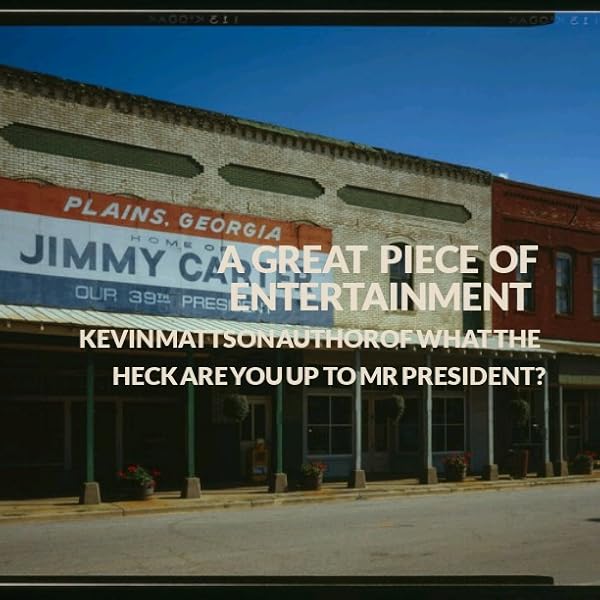
"This marvelous little book shines light on the truly populist campaign that landed Jimmy Carter in the White House. You can actually SEE the authentic and regular-guy style of Jimmy Carter at work. The images of Carter's small-town background are especially compelling. Political and historical junkies will find this book a great piece of entertainment that doesn't discount the moral and visionary heft that Jimmy Carter brought to Washington, D.C."
-Kevin Mattson, Author of "What the heck are you up to Mr President."
-Betty Pope Member of the Carter Peanut Brigade
When I picked up Robert Buccellato's gloriously illustrated new book, Jimmy Carter in Plains: The Presidential Hometown, I fell in love with the town all over again....Get yourself a copy of Robert Buccellato's book. It is a moving map to the heart of the town that made Jimmy Carter. It is also a map to a place that will win your heart for good, and for the goodness that is Jimmy Carter's Plains.
-Grant Hayter-Menzies Author of "Lillian Carter : A Compassionate Life"
Visual representations of politics in America are too often ephemeral, taking the form of campaign literature that quickly vanishes, or news reports that do not last beyond the headlines. Robert Buccellato, in what obviously was a labor of love, has produced something different.
His presentation in pictures of the political life of President Carter before and during his presidency should be welcomed by general readers who are interested in American presidents.
- Max J. Skidmore Author of "After the White House: Former Presidents as Private Citizens"
"This marvelous little book shines light on the truly populist campaign that landed Jimmy Carter in the White House. You can actually SEE the authentic and regular-guy style of Jimmy Carter at work. The images of Carter's small-town background are especially compelling. Political and historical junkies will find this book a great piece of entertainment that doesn't discount the moral and visionary heft that Jimmy Carter brought to Washington, D.C."
-Kevin Mattson, Author of "What the heck are you up to Mr President."
Subscribe to:
Posts (Atom)