Florida Author Robert Buccellato
Rumrunners and Moonshiners of Old Florida was published in January 2019. Travel back to one of the most colorful and captivating periods of Florida history, a time when the rebellious spirit of Old Florida challenged the federal government. It was a time when Prohibition ended legal production of spirits and ordinary citizens turned to a life of crime. The book contains a great deal of images on all aspects of illegal production and distribution of liquor in Florida during the 1900s. It also features a wealth of interviews and anecdotes about life in the period from those who lived through it. It is not a lengthy study of the causes of prohibition, but it is a fun, brief photo book about the great state of Florida that shines a light on a forgotten time of bootlegged liquors, corrupt rural sheriffs, crafty moonshiners, and panhandle traditions that go back centuries.
Robert Buccellato is the author of Florida Governors Lasting Legacies, Jimmy Carter in Plains The Presedential Hometown, Finding Dan McCarthy, and Rumrunners and Moonshiners of Old Florida. Buccellato was the Historian for the Clerk of Courts for Leon County, a position created for him, between 2015-17. In 2017, Buccellato was appointed by Tallahassee Mayor Andrew Gillum to the Canopy Roads Advisory Committee.
Buccellato lives in Tallahassee with his wife and their children. buccellato headshot
He will be at Headquarters Library to present his book on Saturday, March 16 at 2:30 pm in the Foundation Room
link below for details
https://www.aclib.us/books/blog/florida-author-robert-buccellato
Wednesday, March 13, 2019

Thursday, February 21, 2019
Wednesday, February 20, 2019
Florida’s Prohibition Governor
An aide once exclaimed to members of the press, "Florida Crackers have only three friends in this world: God Almighty, Sears Roebuck and Sidney Johnston Catts."

Born on an Alabama plantation in 1863, Sidney Johnston Catts was named after a fallen Confederate general. In 1886, he became awakened by the spiritual and profitable side of the southern Baptist church. As a Born-again pastor, and a controversial figure in history, Catts increased his notoriety by taking advantage of the terrifying spike in racial violence during that decade. Once when a black man threatened him with a knife, Catts killed him with a shotgun blast. This act of violence did little to harm Catts’s political clout among white voters
When Catts moved to the panhandle, the region was becoming consumed with prohibition, a movement deftly led by the Anti-Saloon League and Woman's Christian Temperance Union, Protestant preachers, and First lady Jennings. Across Florida and the South, county by county, the drys were crushing the wets at the ballot box. It was an atmosphere that seemed tailor made for a Sidney Catts, and it didn’t take long for this outlandish man to make a stab in politics.
A political unknown (His Campaign ad featured on the right) in Florida, he campaigned for the office of governor by walking miles and miles covering Florida with a Bible in one hand and carrying a loaded revolver in the other. He often flamboyantly stood on a stump preaching a political sermon to his supporters while wiping sweat from his ruddy red face with a large handkerchief or cooling himself with a palmetto fan. It is said that he based his political truths on "Religion, Race, and Rum." That is he believed that winning elections in the south was all about traditional religious values, white’s fears about African Americans, and public appearance of being against liquor. As his personal and professional record would later reveal he was not a true believer and only used the movement as an opportunity for advancement.
Legend has it that what sparked Catts interest in the Governorship was his discovery that once elected, the governor can live in the Executive mansion rent free. His campaign was historic for its use of both an automobile and a loudspeaker which he would use to travel extensively to rural areas. It was in this race that a form of campaigning now referred to as “Barn storming” was born. Catts’ major opponent in the Democratic Primary was state comptroller William Knotts. Catts won the Democratic ticket by a close margin, but Knotts challenged the win in court. Knowing that the courts would back Knotts against him, Catts took to the roads in his Model T in an attempt to turn the race into a populist revolt against the corrupt establishment of state government. The state supreme court ordered a recount and Catts lost by just a few votes.
Infuriated, Catts went to the Florida Prohibition Party leadership and requested their endorsement, which was given. Catts proceeded to trounce the regular Democratic candidate at the general election. On Election Day in 1916, Sidney Catts became the 22nd Governor of Florida with 43% of the vote and the remaining candidates dividing the rest. He was one of only two candidates from the Prohibition Party to ever obtain such a high position in government; the other was Charles Hiram Randall of California, who served in Congress 1915 to 1921. Despite this feat Catts was always a true Democrat
Sidney Catt’s Inauguration was the first ever recorded on film and Catts, a former Pastor, made sure that it was an eventful ceremony. His Inaugural address would layout an agenda that was both anti-Catholic and prejudice, claiming that Pope Benedict XV was secretly trying to take over Florida. The new Governor would later not attend his own Inauguration over his own fear that the punch would be spiked. He was fine winning as a Prohibitionist candidate. Yet, the second he won, he returned to the Democrats. Despite being a stated defender of sobriety, he shocked many of his most diehard followers by supporting legalized gambling and, his administration was attacked with charges of counterfeiting. In fact during his single four year term, he did nearly nothing for the prohibitionist cause. When it looked like statewide prohibition was going to be a reality, only then did he put his full support behind it. Once out of the Governor's mansion, Catts for a time established a short-lived business of making patent medicines, such as Catts' Hog Tonic, which was full of booze.
After many long years of battling each other it was the temperance forces that had won the day and the writing was clearly on the wall. Still the brewer and distillers were big business. They spent plenty on money to preserve their operations. Anheuser Busch helped bankroll the United Brewers Association to counter lobby legislators who had been brew beat by the anti-saloon league. While their efforts may have proved far too little and much too late. The momentum was with a national repeal. Luckily for many brewery owners, they had an ace up their sleeve - smuggling.

Born on an Alabama plantation in 1863, Sidney Johnston Catts was named after a fallen Confederate general. In 1886, he became awakened by the spiritual and profitable side of the southern Baptist church. As a Born-again pastor, and a controversial figure in history, Catts increased his notoriety by taking advantage of the terrifying spike in racial violence during that decade. Once when a black man threatened him with a knife, Catts killed him with a shotgun blast. This act of violence did little to harm Catts’s political clout among white voters
When Catts moved to the panhandle, the region was becoming consumed with prohibition, a movement deftly led by the Anti-Saloon League and Woman's Christian Temperance Union, Protestant preachers, and First lady Jennings. Across Florida and the South, county by county, the drys were crushing the wets at the ballot box. It was an atmosphere that seemed tailor made for a Sidney Catts, and it didn’t take long for this outlandish man to make a stab in politics.
A political unknown (His Campaign ad featured on the right) in Florida, he campaigned for the office of governor by walking miles and miles covering Florida with a Bible in one hand and carrying a loaded revolver in the other. He often flamboyantly stood on a stump preaching a political sermon to his supporters while wiping sweat from his ruddy red face with a large handkerchief or cooling himself with a palmetto fan. It is said that he based his political truths on "Religion, Race, and Rum." That is he believed that winning elections in the south was all about traditional religious values, white’s fears about African Americans, and public appearance of being against liquor. As his personal and professional record would later reveal he was not a true believer and only used the movement as an opportunity for advancement.
Legend has it that what sparked Catts interest in the Governorship was his discovery that once elected, the governor can live in the Executive mansion rent free. His campaign was historic for its use of both an automobile and a loudspeaker which he would use to travel extensively to rural areas. It was in this race that a form of campaigning now referred to as “Barn storming” was born. Catts’ major opponent in the Democratic Primary was state comptroller William Knotts. Catts won the Democratic ticket by a close margin, but Knotts challenged the win in court. Knowing that the courts would back Knotts against him, Catts took to the roads in his Model T in an attempt to turn the race into a populist revolt against the corrupt establishment of state government. The state supreme court ordered a recount and Catts lost by just a few votes.
Infuriated, Catts went to the Florida Prohibition Party leadership and requested their endorsement, which was given. Catts proceeded to trounce the regular Democratic candidate at the general election. On Election Day in 1916, Sidney Catts became the 22nd Governor of Florida with 43% of the vote and the remaining candidates dividing the rest. He was one of only two candidates from the Prohibition Party to ever obtain such a high position in government; the other was Charles Hiram Randall of California, who served in Congress 1915 to 1921. Despite this feat Catts was always a true Democrat
Sidney Catt’s Inauguration was the first ever recorded on film and Catts, a former Pastor, made sure that it was an eventful ceremony. His Inaugural address would layout an agenda that was both anti-Catholic and prejudice, claiming that Pope Benedict XV was secretly trying to take over Florida. The new Governor would later not attend his own Inauguration over his own fear that the punch would be spiked. He was fine winning as a Prohibitionist candidate. Yet, the second he won, he returned to the Democrats. Despite being a stated defender of sobriety, he shocked many of his most diehard followers by supporting legalized gambling and, his administration was attacked with charges of counterfeiting. In fact during his single four year term, he did nearly nothing for the prohibitionist cause. When it looked like statewide prohibition was going to be a reality, only then did he put his full support behind it. Once out of the Governor's mansion, Catts for a time established a short-lived business of making patent medicines, such as Catts' Hog Tonic, which was full of booze.
After many long years of battling each other it was the temperance forces that had won the day and the writing was clearly on the wall. Still the brewer and distillers were big business. They spent plenty on money to preserve their operations. Anheuser Busch helped bankroll the United Brewers Association to counter lobby legislators who had been brew beat by the anti-saloon league. While their efforts may have proved far too little and much too late. The momentum was with a national repeal. Luckily for many brewery owners, they had an ace up their sleeve - smuggling.
Tuesday, February 19, 2019
Al Capone In the Panhandle

Al Capone and Destin
During the midst of prohibition, a group of local business leaders in Tallahassee discovered that the notorious mobster Al Capone was passing through town. Despite his place on the FBI’s “most wanted” list, a small crowd that included a few police officers enthusiastically welcomed the gangster into the capital city. His ability to be one step ahead of the law made him a folk hero to the common man. With the manner of a lofty celebrity, Al Capone simply rolled down the window of his fast-moving black limousine and waved to the crowd now cheering wildly.
Although was most known for his Chicago connection and Miami vacations, Al Capone was no stranger to the Florida Panhandle. It was in the sunshine state that Capone liked to rest. The Sunshine State was his getaway from cold winters and various assassination attempts, but it was also an important part of his vast criminal empire.

The coast of North Florida was where his bootleggers would make landfall, on their long dangerous journey smuggling in spirits from the Caribbean islands.
“One of Al’s favorite recreation spots was Grayton Beach,” claimed Frank Pericola Editor of the Panama City News Herald. Likewise, the Valpariso Inn just past Fort Walton was another local joint Scarface enjoyed visiting. But, he was always well behaved, the last thing the famous man wanted was attention of any kind.
Although Capone purchased a massive 14-room Miami Beach retreat under his wife’s name for $40,000 in 1928, he was always moving around the state. He made countless road trips along both coastlines while his mansion was undergoing $100,000 worth of renovations, including the additions of a swimming pool, boathouse and dock. According to local historian Tony Mennillo, one of Capone’s favorite travel destinations was the Emerald Coast given that it was likewise an ideal spot for bootlegging.
“It was desolate and hard to get to, it was known for its moonshine,” said Mennillo.
During the 1920s, Destin was something of a retreat haven for bootleggers, including Capone. Just a few years ago, the Tampa Tribune had famously proclaimed the location Florida’s “Little Vegas” for its connections to illegal gambling. Locals say Capone would run liquor through the Choctawhatchee bay. That there was a special train located in nearby Defuniak that travelled along a straight shot to Chicago, coupled with the area’s speculated waterways, seemed to confirm forever a local theory that Capone hid a smuggling operation in plain sight.

According to the book, “Salty Memories Along the Coastal Highway” written by Tony Mennillo, many locals in Defuniak proclaim with absolute certainty that Al Capone, the legendary mobster, was there as a frequent vacationer. The stories go that a man nicknamed “Big Al” who possessed many of the same mannerisms as Al Capone was believed to be him on holiday throughout the 1920s and early 30s. Big Al had his own black limousine, not unlike the one described speeding on the streets of Tallahassee that was confirmed to belong to Capone. He had his own driver and could be found playing marathon rounds of golf on newly trimmed Bermuda grass.
Sometimes he would approach various locals to be his golf caddies for the day. The young men always accepted the offer because he was known to be a great tipper. After he got to know them a bit he would identify himself as Al Capone. After golfing, Big Al would always take the young caddies back to his clubhouse for a beer. If the bartender declined to give the teenage caddies a beer, the rage of Capone would be felt.
He would yell, “They’re with me and I said get ’em a beer.”

Governor Carlton and Al Capone
In hindsight, the state is incredibly fortunate that a man like Doyle E. Carlton was governor during some of its most difficult periods. Between 1929 and 1933, Carlton faced four major natural disasters, the final collapse of Florida’s land boom, an infestation of the Mediterranean fruit fly which crippled the state’s citrus business, and the national great depression.

Fearless is the best word to describe the state’s 25th governor. The moral governor whose critics labeled self-righteous once vetoed a pro gambling bill despite being offered $100,000 from the state’s organized crime to sign it into law. Governor Carlton made a powerful enemy in Florida resident and notorious mafia boss Al Capone. Carlton’s public demand that Capone sale his Miami Beach home and leave the state, caused the mobster to threaten the Governor’s life. The threat was apparently so credible that President Herbert Hoover sent special FBI agents down to the governor's mansion to beef up security.
According to some sources, this feud stems from the actions of the Governor following Capone’s return to the state after a prolong vacation in 1930. Capone was intending to return to his Palm Island home, and it didn’t take long for Doyle E. Carlton, to issue a statement banishing Capone from returning to Florida on March 19th, 1930. Governor Carlton instructed law enforcement to detain Capone on site and escort him to the state border with instructions not to return. Once you explore the track record of many panhandle sheriffs, it’s not too difficult to understand why the Governor’s wishes weren’t carried out. In fact the behavior of many law enforcement agents towards Capone, almost revering him as a celebrity, meant that he was untouchable.
Capone was stopped in Fort Walton for speeding according to one retired police officer. Though as it turns out no ticket was ever recorded. It’s been speculated that the on-duty officer may have either kept it as a souvenir or made it go away. It has only been recently that archivists at the Northwest Florida Heritage Museum have uncovered photos of Capone vacationing in Panama City, which as Diane Plack is quick to proudly point out is the first real concrete proof that Capone was ever here besides the oral histories of those that interacted with him.
There he is in black and white, captured as proof.
While Capone’s legacy is one of Murder and organized crime, his numerous visits to the Florida Panhandle were nothing short of electric to those who saw him. It was here in the Florida Panhandle that he could disappear from the stresses of smuggling bootlegged Whiskey. He would use many aliases during his long travels within the sunshine state, the most prevalent being “A. Brown.” The Mobster kingpin had several ties to the sunshine state, even owning vast property in Deerfield beach. But he also had business connections in Valparaiso and Florosa Florida. Rumor has it that he would run liquor brought in from Cuba across the Choctawhatchee Bay.

For some, the jury is still out as to whether Capone spent much if anytime in the panhandle, though others firmly believe this was his home away from home. What has never been disputed was his influence on smuggling throughout the state, and while some may challenge what his Florida vacation spots were, everyone agrees that members of his organization were located across the panhandle. One story that Diane Plank tells seems to confirm that the mobster’s presence in the panhandle was common knowledge. As the story goes, a family friend when she was a young girl was caught suddenly in a rough patch of weather as she was boating in her tiny schooner along the shore. She and the other members of her party ventured into a darkened and sculpted portion of the coast and their boat was overturned suddenly. They were crowded by several tall men wearing double breasted suits who were extremely curious but equally anxious to see them leave.
Rum runners and Moonshiners of old florida now available for purchase
https://www.amazon.com/Rum-Runners-Moonshiners-Old-Florida/dp/1729616313
Images from the New BOOK Rum Runners AND Moonshiners of Old Florida

https://www.amazon.com/Rum-Runners-Moonshiners-Old-Florida/dp/1729616313

Florida is my Home. I was born in Hollywood, Florida, just a few miles away from the old hangouts of Capone, and where the mob moved its base of operations following the glory days of Prohibition. My father's family moved there in the 1970s after nearly a century in Brooklyn. If you google my last name you'll discover no winners of high office, no Nobel prizes for medicine, or famous inventors. What you'll find is a bunch of swarthy people with olive skin from Sicily that helped create the Mafia and a sweet bread cake of the same name from Lucca, Italy. Legend says it was created by one of my ancestors. Clearly, he was a modest person with a self-deprecating sense of humor because it’s a giant ring-shaped fruit cake. When I was born my Mother’s father, Walt Young, was a member of the Florida House of Representatives for Pembroke Pines, and mom being an unabashed "Daddy's Girl" dragged me over the next ten years on a series of long car drives from Hollywood to Tallahassee where he would finally retired. This long state would wiz past me and my road dog mother would take me through the back-roads of 27 to save money on tolls. There I would see the real Florida of the 1940s and 1950s, the tourism traps that seemed to die out once Disney arrived. It was on these car rides with Mom and sometimes with my Grandpa that I learned about Florida’s culture, and its character.

But it was settling down in the Florida Panhandle that opened my eyes to a completely different slice of Florida culture. Of course, I was living in Tallahassee, a liberal cultural citadel within the Panhandle. The real Panhandle or Old Florida as its sometime called is an intriguing mix-up of rural living and beach resorts, small-town living alongside precious outlets of nature, beach and forest. The vast and compelling settings of Florida's historic past that are happily not lost in its busy present and increasing modernization.
I married a southern belle with many Florida Cracker virtues, who along with my in-laws quickly informed me that I was not a true Southerner, but a Yankee from Miami. Over the past five years I have studied the history of Florida's forgotten frontier and its rural past. Throughout this journey many colorful figures have come into focus. This south Florida Yankee has become intrigued with the rebellious spirit of the Florida moonshiner and cracker rum-runner. The powerful, charming, forces of nature that made their illegal products in the region’s swamps so that the rural laborer and well-dressed big city flapper alike could happily consume it. The men that made so many moonlight journeys towards their river shakes to make the shine or race it across dense forests in stolen cars from quickly unloaded schooners. The beach hoppers and well healed tourists who came here looking for rum and spirits, and were never disappointed. Each played their small part in one of the most compelling human dramas in the sunshine state’s outlandish history.

One of the greatest parts about gathering some of the interviews and source material for this book was the good-natured enthusiasm from the people I encountered. It was truly marvelous the way each interview began to take on a similar pattern. I would usually start off with a local group, association, or in many cases a historical society. I would make a dry call to the main location and would usually be greeted by a very friendly volunteer, who upon hearing the subject of the book would laugh loudly. The median age on the other end of the phone calls was usually about 72. So clearly, I was speaking to someone who had first-hand knowledge.
I would, ask them if they had any knowledge or personal experiences that could be used in the book, and the other end of the phone would then stop laughing and like clockwork grow silent. If it was a man on the other end, a moment of brief reflection was all they needed, and then they were off to the races. Almost at once they would start up the narrative of their lives. Talking about their childhood, the community they grew up in, and the adults around them who had remote connections to bootlegging or moonshiners.
If it was a woman on the other end, they tended to need another round of probing. Regardless of county, city, gender, or race they were all natives to the panhandle or central regions of the state. Little by little, they enjoyed talking to me about the past and the wild activities of their neighbors. But, of course there was no mention about the possible involvement of their own families. They all had one final gatekeeper to prevent me, a stranger, from getting to the fruit. The men wanted you to know that this was a very religious part of the country.

Rum Runners and Moonshiners Now Available for Purchase

Foreword by Kartik Krishnaiyer
It’s difficult for modern Floridians to conceive what prohibition was like, even with dry counties in the parts of the state persisting into this millennium. It's difficult also for many in our state to really grasp how important this era was, and how much this bustling, modern mega-state was defined by the shadows of the 1920's.
Splits between wets and dries characterized political and societal life throughout the nation. Florida was no different but as a southern, largely religious state people’s entire life and ideology were defined by if they were wets or dries. At the beginning of the era the state’s population was skewed toward the northern part of the peninsula, which was known as the Panhandle, and where dries dominated. But by the end of the prohibition era, the state was much more balanced with huge growth in the south where wets were more prevalent. This created a unique tug of war throughout the state. Florida’s willingness to allow local municipalities to implement prohibition long before the Volstead Act passed made it a contentious issue that divided Floridians in a state that was rapidly changing. For three decades people’s entire life and ideology were defined by if they were wets or dries.
Urbanization and immigration were leading triggers on the move for prohibition throughout the country. A fear of outsiders and a loss of simple agrarian life that was being corrupted by the bottle and vices that come with alcohol were leading justifications for dry movements that sprung up throughout the late 1800’s and early 1900’s.

Carry Nation the country’s leading prohibitionist activist visited Florida in 1908 touring the state. Nation’s impact was profound - politicians joined her call for prohibition as did many housewives and non-political activist types. Nation’s visit helped many local municipalities push through ordinances making towns, cities and counties “dry” before the Volstead Act imposed prohibition nationally. The impact of Nation in many small towns was pronounced. Making areas “dry” became the sole political issue in many places as early as the 1908 election.
In one-party Florida, as with the rest of the south, politics would fall upon tribal or single-issue lines. From the late 1910’s until the last 1920’s the most important issues in the south were related to prohibition and race. Often being soft on prohibition implied a certain liberalism on race and immigration in the eyes of those who were prohibitionists. But ethnic diversity was coming to Florida and the prohibition era captivated this.
In 1916, as prohibition was becoming the dominant domestic issue particularly in rural areas Sidney Catts was elected Governor of Florida after being denied the Democratic nomination in a recount. Catts secured the nomination of the Prohibition Party and was elected. Catts talked extensively about political & bureaucratic reform and married that rhetoric with anti-Catholicism and overt racism. Catts electoral success showed the ability of someone associated with being “dry” to buck the established Bourbon Democratic Party establishment and get elected. Catts showed how popular prohibition was among rural conservatives. Catts though a registered Democrat was the only person running on a line other than the Democratic one to win the Governorship between Reconstruction and the 1960s.

Catts’ victory led the legislature to impose a form of prohibition statewide BEFORE the Volstead Act was passed. While Florida’s governing northern rural counties remained dry and conservative in this period for the most part other parts of the state, far-flung from the centers of power in the 1910’s and 1920’s took a different approach.
Developments would soon after the imposition of state laws and the Volstead Act demonstrate how absurd a notion prohibition was in general for a state as large and diverse as Florida was becoming. With ethnic Italians and Cubans moving into the peninsular portion state, and Catholics in general nationally "wetter" than other groups, the landscape was changing forever in the Sunshine State. These fault lines which were becoming apparently politically in the late 1910’s would be exposed once and for all in the 1920’s. In an era before interstate highways and the Florida Turnpike, before jet airplanes, before the internet and television, communications were delayed and often limited between the northern rural areas which governed Florida and the south where prohibition was disdained.
Consistently tension in Florida politics and society in the early and mid-1900’s revolved between the rural north with most of its residents tracing their southern lineage to Georgia, Alabama, Mississippi or South Carolina with the rest of the state who was filling up with people from the north and even abroad was only beginning to percolate when prohibition was implemented. The Florida land boom coincided with prohibition and made the implementation of dry laws unrealistic beyond the small towns and rural conservative counties of the Panhandle and Big Bend.

A vast, sprawling peninsula lay below the areas where prohibition was popular and it became almost impossible for law enforcement officers to force the laws on those areas. Much like the Seminole’s and other native Americans who had fled south into the vast hinterland of the state to remain “unconquered,” bootleggers drifted to Florida, particularly the Miami/Fort Lauderdale area. Shootouts were common and law enforcement officials had very hard time tracking bootleggers. Meanwhile gambling became commonplace and levels of public corruption among elected officials and bureaucrats reached levels never seen in the state’s history. Law enforcement itself wasn’t immune and prostitution became more prevalent. It was an era that shaped much of the identity of South Florida and other parts of the state where prohibition was not welcomed by large portions of the population and businesses.
Just a few years earlier game wardens had filled up the region to try and prevent the illegal plume hunting - shootouts and general lawlessness followed until the trade in bird feathers dried up. But even that era seemed tame by comparison to what would happen on the Miami River and on the beaches of Miami and Fort Lauderdale in the 1920’s and early 1930’s.
Bootlegging was common as was the ability of pharmacists and others to “prescribe” medicine with high alcohol content. In the Tampa Bay area, rum-running and other forms of bootlegging were also common and with the wide areas of undeveloped wilderness surrounding Tampa, Miami and Fort Lauderdale in the 1920’s it was easy to set-up shop outside of town or near the water and do business wherever was needed. For law enforcement cracking down on such a trade proved futile even if the politicians and other interests behind prohibition couldn’t understand the circumstances which led the Florida peninsula to be among the wettest places in the country during the 1920’s.
In Robert Buccellato’s other works about the state we’ve seen the evolution of Florida from small town oriented and reactionary to urban mega state. In Finding Dan McCarty, Buccellato brilliantly articulates an era of Florida politics and growth where the counties of South Florida who were driving the state’s economic growth were in a tussle to wrestle political control away from the largely rural northern part of the state. This work can be considered a precursor to that book, a prequel if you like.

The elements for a modern Florida and the explosive growth in relevance of southern Florida were intertwined with prohibition. While the common themes of land speculation, draining of the Everglades and an automobile and plane infused tourist-boom are given credit for the shift in the state, the prohibition era played an important role.
Buccellato’s knowledge of Florida History is among the sharpest around. This period of Florida’s evolution hasn’t been appreciated enough as it played a critical role in crafting a state that was attractive for outsiders and ready to boom after World War II. This era helped make southeast Florida a more cosmopolitan melting pot than had been seen in the state’s history with migrants from the Northeast and Midwest as well as foreign immigrants. The Tampa area also grew similarly.
What came out of the prohibition era was a more diverse state and one whose population was changing. While it took the leadership of the state decades to understand the changes and adjust accordingly, everyday life in Florida outside the small rural towns of northern Florida was never the same. While prohibition was undoubtedly a mistake spurned by an era of anxiety towards urbanization and immigration, it shaped Florida for decades to come.
Now available for purchase
https://www.amazon.com/Rum-Runners-Moonshiners-Old-Florida/dp/1729616313
Saturday, December 22, 2018
New Book Rumrunners and Moonshiners of Old Florida

Helen Strickland is the president of the Wakulla Historical Society and a lifelong resident of the region. Her family once owned a gas station in Wakulla, on a popular intersection. Her family would watch cars go by on the road and her parents could tell if the owners were shiners during the 1950s and 1960s. They would sometimes even shout out “There goes a shiner or a bootlegger.” Her parents could tell because often how the shiner’s cars were built seemed to give them away. “Often their tires were just giant and if they had shine in the trunk it would just weight down the entire structure of the automobile. Just how it was seating you could tell they were going to make a run.”
According to Strickland, there were bootleggers everywhere in Wakulla and in the entire panhandle for that matter. As a child growing up after prohibition Helen Strickland would take walks in the forests and rivers of the community and like relics of a bygone era, she would find the stills, jars, jugs, and even cooking locations. These old bootlegger trail pickups were commonplace. Old habits die hard in the Panhandle, as Helen noted in recalling a quick and cheap method the elderly would employ to get intoxicated. A tradition that stems from long before prohibition.
“Older people would also take corn cobs and hide them in clocks and allow them to ferment. Then after a while, like four or five months they would eat them.”
Apparently, they would just chew on these old cobs, sometimes all day long, and it was like having a continual glass of shine.

People who lived along the rivers during prohibition lived very modest and simple lives. They hunted for duck and fished for mullet and jack fish. They grew cotton, corn, or peanuts and grew their own fresh vegetables. They traded for what they could, and although on occasion they had to sadly part with their hard-earned cash, as John Schafer explains, the only real cash crop in the area was moonshine.
Stills along the swampland were regularly moved and removed, and people in the know would wear special badges or pins to identify themselves. If you operated a still you needed a pin. If you were going to take a look at a still or wanted to make a purchase, you had to wear a pin.
“Everyone it seems wore a badge,” said Jabot Williams a local shiner
“If you didn’t have a badge they would pull a gun on you, and there were a lot of shootings.”

To avoid detection when purchasing ingredients, still operators got creative, going to every other store in a community to buy one item here and another there to avoid suspicion. However, this tactic seldom ever worked because shiners would buy ten pounds of sugar at a time at these stores. Agents would track the increases in sugar sales per grocery store to determine if there were shiners in the area. When approaching their stills from the main roads, shiners would take a different path each time to not wear down a trail. If a still is left in one place for too long, it will certainly attract the attention of wild animals. Wild hogs, the police discovered, love sugar mash. So, they learned to track their swine friend’s paths in the wilderness. Likewise, the shiners learned to also trust the movements of the wild hogs. If they heard a hog nearby, they knew the agents weren’t far behind.
New Book Rum Runners and Moonshiners of Old Florida

Monday, November 5, 2018
Rum Runners and Moonshiners of Old Florida
I'm so excited to present the official book cover to my new book "Rum Runners and Moonshiners of Old Florida"
Goes on sale the week of January 10th 2019.
Release date January 19th 2019 (The 100th Anniversary of the 18th amendment)
Special thanks to my brilliant wife Stephanie

Saturday, September 15, 2018
My friend Adam Baumel is running for NY Assembly. Please help him out and share
Adam Baumel for NYS Assembly
https://www.baumelfor64.com/
This is my best friend Adam Baumel
He is quite possibly one of the kindest most decent and honorable men I’ve ever known. He’s also a shameless socialist Democrat running against a painfully foolish and unqualified Republican in a devoutly conservative district.
He’s also a veteran who dropped out of school so that he could serve his country in the Navy in a time of war.
He’s my son‘s godfather and is always the first phone call I receive whenever anything meaningful in my life takes place.
He is now officially the Democratic nominee for New York’s state assembly seat 64, running in a seat that was tailor-made so that only Republicans could win. Running in the district that doesn’t usually even get a Democrat to run against the Republican. And here is walking the streets giving people a choice.
Encourage all of you to look him up join his Facebook group like his posts and share this.
Because this is how we win, running everywhere and running with values — with Adam Baumel.
https://www.baumelfor64.com/
This is my best friend Adam Baumel
He is quite possibly one of the kindest most decent and honorable men I’ve ever known. He’s also a shameless socialist Democrat running against a painfully foolish and unqualified Republican in a devoutly conservative district.
He’s also a veteran who dropped out of school so that he could serve his country in the Navy in a time of war.
He’s my son‘s godfather and is always the first phone call I receive whenever anything meaningful in my life takes place.
He is now officially the Democratic nominee for New York’s state assembly seat 64, running in a seat that was tailor-made so that only Republicans could win. Running in the district that doesn’t usually even get a Democrat to run against the Republican. And here is walking the streets giving people a choice.
Encourage all of you to look him up join his Facebook group like his posts and share this.
Because this is how we win, running everywhere and running with values — with Adam Baumel.
Thursday, November 9, 2017
Jimmy Carter in Plains by Robert Buccellato
The following are new promotional images for the Book Jimmy Carter in Plains by Arcadia Publishing


Wednesday, February 8, 2017
Dear Jim
Jim Williams was my friend. I can't claim that I was the nearest or the dearest to him. But, we got along very well during the three and a half years we communicated with one another. I would fit our phone interviews awkwardly into lunch hours or breaks during my day job. Whenever I had a day off for a holiday, I would schedule a prolonged interview with him, knowing that he would be at his family's real estate office regardless of the day. We would plan to talk for an hour, it would always turn into two or three. If I needed to get somewhere in the afternoon, I would always get there late. He always made me want to stay on the phone.
We would always stay on the phone for hours chatting, he was so colorful, so open and modest that each conversation was like a marathon deeper into his humanity. He was a farmer, veteran, family man, devoted husband, outstanding citizen, a mentor to me, great conversationalist, and thoughtful public servant. He was state senator during Florida's Golden Age, who once stood up to a Police Chief who attempted to fire a deputy for of all things giving Jim Williams a ticket. When Dempsey Barron the legendary Senate President tried to manhandle Williams and Bob Graham outside of the senate chambers, ho coldly informed him that "If he ever touched him like that again they were going outside!"
When at a Campaign rally during his first senate race, a jolly Claude Kirk approached him and informed "You're a great guy. But, we're gonna kick your a**!" He smiled at him and told him to bring it on. He was a man who went to war a hawk and who learned to love peace when he earned his Bachelor's degree later in life. He was a furiously loyal friend to Reubin Askew and the two men had the most caring friendship of any Florida gubernatorial ticket. Trust me on that, I've known a few of them.
He was also blessed with quality that has become rare in politicians, he was kind. Again many politicians try to project kindness, and a lot of them are openly very decent people. But, Jim Williams like Reubin Askew were kind at their core. Decency was marrow deep in them.
When Askew was looking to replace his first Lieutenant Governor, most everyone thought he would ask Bob Graham to be his running mate in 1974. When Askew called Williams to meet him at the Governor's mansion, Williams said no because he had been working all day. The Governor finally got a yes out of the state senator after it was agreed that Williams didn't have to wear a suit. After losing the democratic primary to Bob Graham, Williams took what he considered the greatest job he ever had in public office, deputy Secretary of Agriculture in the Carter White House. "I had to have senate approval and I got my own car!" Williams would say with a laugh.
When I told him once I was going to see Carter teach Sunday School he told me to say hi, before mentioning, "He probably won't know who the hell I am."
Jim Williams always looked with amazement that many within his old Senate district looked on Buddy Mackay with such distrust. As some kind of left wing nut. "I'm the freaking liberal!"
And, Yes he was, a shameless Liberal. He grew to dislike the Republican mentality and looked on the tea party with total amusement. He called himself a "Dove" openly and with total conviction believed in loving your fellow man. He called me his friend and it was an honor that I will always hold dear in my heart. Next only to my Grandfather and Reubin Askew, this man has shaped my political identity.
During what would be our final conversation he talked about how odd it was that he was in his eighties as both his parents died before sixty. He spoke about wanted to throw away all his awards, yet his kids weren't letting him. Being that I have four of my grandpa's awards at my house I told him it wasn't gonna happen. Then I told him about my new book (the one on Jimmy Carter) and he said he was proud of me. In that moment I had a deep respect and admiration for that kind old man, that I didn't think possible. I then had to go pick up my wife from work, as always on a Jim Williams call, I was running late.
Me and the Family in the Wakulla News

Robert Buccellato of Crawfordville is an author, as well as Historian for the Clerk of Court of Leon County.
He has published three books to date, “Florida Governor’s Lasting Legacies,” “Finding Dan McCarty,” and “Jimmy Carter in Plains: The Presidential Hometown.” The latter tells the fascinating and inspiring story of Jimmy Carter’s surprisingly successful campaign and 1976 victory of becoming the 39th President of the United States.
The book describes how growing up in the small town of Plains, Ga., shaped the man, and how together he and his community of supporters, known as the Peanut Brigade, changed the nation through an unprecedented hands on approach to politicking.
It walks you through the presidency, highlighting those things that set Carter apart from presidents before him, such as his position on civil rights and his eventually winning the Nobel Peace Prize.
Buccellato also describes the inevitable changes the town of Plains underwent as a direct result of the influx of tourists and media attention surrounding the campaign and presidency. Much effort went into preserving the small town’s charm despite it’s growth during this period.
The book is not only well written, but it is also artfully illustrated with an array of old photographs to support and enhance the story.
From the moment you meet Buccellato, it is obvious that he has a great appreciation for history.
More importantly, he is a story teller who enthusiastically imparts bits of historical whimsy to anyone who will listen.
When asked what inspired him to write this book or why Jimmy Carter, he generally answers that he was largely influenced by his grandfather, a 20-year legislator in the Florida House of Representatives during the Golden Years of Florida Politics.
However, in a speaking engagement and book signing at the Gwinnett County Public Library in Atlanta earlier this year, he admitted that upon further reflection, the answer actually runs deeper than that. Carter, as a peanut farmer from South Georgia, beat all the odds and became a huge success who “has the ability to make things that seem extraordinarily impossible not only possible, but easy, with hard work and determination,” he says.

“And that feeling that you and your community can run, and win, a presidential campaign, is something, I think, that speaks to the best of our system,” Buccellato says. “And it’s still evergreen, this possibility of improving and helping to evolve our system.”
An avid supporter of preserving the “pockets of history across the country, because many have been lost” Buccellato says that upon entering Plains, one sees “miles of hill and tree, people feel they’ve stepped back in time to a lifestyle of day’s past.”
In fact, he has been known to compare Crawfordville to Plains.
When asked about this, he readily offered noteworthy similarities between the two towns. For instance, the old world feel of the 1940s, ‘50s and ‘60s is still present in both places.
In Plains, it’s in the preservation of the old Train Depot that acted as campaign headquarters, largely because it had the only public restroom in town.
Here, the sense of old Florida can be found in the beach bungalows and white sand beaches.
Additionally, both towns have what he described as a detached sense of community, still supporting a feeling of “the leisurely agrarian lifestyle and a freedom from being plugged-in.”
The book mentions that shortly after the election, Plains received its first traffic light.
This brought back memories of growing up in Crawfordville, during a time when there was only one traffic light.

Buccellato has been writing since around the age of 12, beginning with fiction and later focusing on non-fiction. Originally from Hollywood, Fla., he moved to the panhandle in 1998.
After attending FSU, he married his wife Stephanie and welcomed their son Croston to the family last year.
In addition to his family, career as historian and numerous book publishing’s, Buccellato manages book signings, radio shows and speaking engagements, as well as a YouTube channel and a Florida history blog.
He is currently working on writing his fourth book, a biography of Jimmy Carter.
here is the link folks
http://www.thewakullanews.com/content/%E2%80%98preserving-pockets-history%E2%80%99
Thursday, February 2, 2017
Tallahassee Democrat Blog Post
Here gang here is my first blog post with the Tallahassee Democrat Community blog
hope you like it
http://blogs.tallahassee.com/community/2017/02/01/within-the-margin-of-error/
Whenever I close my eyes, my mind takes me to that boiling hot room in the summer of 1776, when those brilliant and flawed men signed a document. Creating in a moment of anger a new nation. I know you think I’m trying to be poetic or wistful. But, my wife will tell, I really am that big of a dork.
Some of my conservative friends take the textualist approach when reading our founding documents, seeking to uphold the original meaning of the United States Constitution and statutes. These are usually those who are strong supporters of the Second and Tenth Amendments, and view federalism with distrust. They are also more likely to approve tax cuts for big businesses, go to church daily, and are almost sociologically unable to picture themselves voting Democratic.
Many of the Republicans I know think that government should get out of their pockets and that the free market can solve most of our basic economic needs. In their eyes labor unions are lazy thugs who limit growth, and government regulations should be reduced to allow the nation’s business sector to flourish.
They of course forget however that such regulations were created to safeguard against new levels of corporate greed that periodically brought our entire nation to the brick of financial collapse. That it was labor unions that gave us paid family leave, the five day work week, and ended child labor. Things that they themselves benefit from.
These voters who champion individualism over community, are promoting a very attractive product. It really is, its the belief that you aren’t responsible. Global Warming, crime, poverty, low test scores; who cares, its not your problem. The only thing you have to worry about is your family, your street, and whats for dinner. Is my fridge full? Is my job safe? What do I care about the faceless untouchables of the world. Its tempting to think that your lifestyle, that your actions, and that your involvement doesn’t matter.
But, here’s the thing, its not enough to claim your faith and project your values, you must also strive to place yourself in others shoes. To allow their struggles to become your own. The founding fathers for their part lived lives of constant advocacy, setting an example for posterity, as well as trying to improve their own flawed characters.
I’m afraid these next four years are going to be trying times in this country. Our relationships, values, human comforts, and even our faith in ourselves will be fiercely tested. But, thats okay folks disagreement will never be as difficult to face as silence. We can not afford to cut off one another over a dumb facebook post, or the filling out of a ballot. Even something so important as a president’s rocky first few weeks is not reason enough to end friendships. It is always going to be important for me to remember that while I am a registered Democrat, most of the people I love are not. It’s not enough for me to look at America with rose colored glasses. I have to share that vision, and I have to also be open to other precious forms of patriotism.
This blog post is my opinion only and does not express the views of any other institution or individual not noted above.
Thursday, May 26, 2016
THE Top Ten Presidential portraits
Ten
Jimmy Carter

This is not the official White House Portrait for the Carter Presidency. But, it is in my opinion vastly superior. It is not only a great and detailed study of the Oval office, and in 1970s design. It has so many truly revealing elements of the Carter Presidency and candidacy (aka the Truman bust and the glass donkey)
nine Kennedy
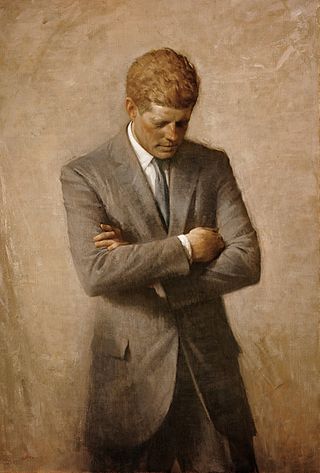
When this was first hung in the white house, some critics thought of it as a "cop out". That Shikler was uncomfortable with drawing the face of a dead figure. For me, when i first saw this as a Child it had a lingering impact on me. He is clearly a thoughtful and mindful man in this painting, surrounded by the void in the background. Even from the age of five I got the sense that something tragic happened to this man and it is a perfect likeness of the fallen President.
Posthumous official presidential portrait of U.S. President John F. Kennedy.
Aaron Shikler - The White House Historical Association

Nine Franklin Delano Roosevelt
I'm not really a fan of the more well known portrait of Roosevelt, the study of his hands. This official portrait is more of a romantic image of the wheelchair bound President. His figure is slightly elevated, in what i always thought was a slight reference to his disability as the man was trying to adjust himself, and he is surrounded not by an American flag but the Presidential flag. His profile is shaded and dramatic looking with a desk, chair, and wallpaper that like the man and his suit seem to perfectly fit the time.
Official Presidential portrait of Franklin Delano Roosevelt
Eight Harding

I've always loved this image, and the small bit of red in the background trees, with the Capitol in the distance. Harding's deep eyes look tired and sad in this striking image, and his overall appearence is highly Presidential. Its a thoughtful image for a man not always regarded as wise or clever.
Official Presidential Portrait of Warren G. Harding
seven Clinton

I don't think any other President has been made to suffer from so many terrible portraits then Bill Clinton. I mean look at this one from the Yale Club of New York -

God lord, thats painful
But, I always liked the slick look of his official white house portrait and that his eyes are painted so that no matter what angle you are looking at you are always making eye contact with him.
speaking of terrible portraits

and

BAHAHAHAHAHAHA
Six Arthur

What can I say I'm a sucker for the carpet and the surrounding details
Official Presidential portrait of Chester Alan Arthur
Five Pierce

Four McKinley

Signing of the Peace Protocol Between Spain and the United States, August 12, 1898, (1899), by Theobald Chartran (White House Historical Association)
Not an official portrait but this is just one of my favorite painting ever. The details are incredible, the images from outside the window including the white house columns make you feel like your in that moment in time. The President towering over everyone as he looks at the signing of the treaty, its just a powerful image
Three Garfield

Two Lincoln

One Teddy

Thursday, May 5, 2016
Rethinking "The Black Cauldron"
In 1985 Disney made a bold, really bold and innovative decision. They were going Dark. It was the determination of the studio's powers to be that their most recent projects were coming out a bit on the weak side. Since Walt's death in 1966, the studio was taking longer to produce films, the theme parks were the only things keeping them a float, and there was a lot of fat in the Animation department's bones. Plus, it seemed that the public was moving towards a more adult driven audience. Like 1979's Lord of the Rings, which was commercially very successful, if critically disappointing.

The Rescuers was the sole film that studio produced that seemed to bring in the kind of revue that Disney had once enjoyed. So some how it was decided to adapt The Black Cauldron from the book series The Chronicles of Prydain.
Now here is the summary and you tell me if this sounds like the kind of tale disney would usually produce
In the land of Prydain, Taran is an "assistant pig-keeper" on the small farm of Caer Dallben, home of Dallben the Enchanter. Dallben learns that the Horned King is searching for a mystical relic known as the Black Cauldron, which is capable of creating an invincible army of undead warriors, the “Cauldron Born”. Dallben fears the Horned King may try to steal his pig Hen Wen, which has oracular powers, and use her to locate the cauldron. Dallben directs Taran to take Hen Wen to safety; unfortunately, Taran's foolish daydreaming causes Hen Wen to be captured by the Horned King's forces.

Taran follows them to the Horned King's stronghold. Along the way, he encounters the small, pestering companion Gurgi, who joins Taran on his search. Taran leaves Gurgi to sneak into the castle and rescues Hen Wen, who flees, but all too soon he is finally captured himself and thrown into jail. A fellow captive, Princess Eilonwy, frees Taran as she is trying to make her own escape. In the catacombs beneath the castle, Taran and Eilonwy discover the ancient burial chamber of a king, where Taran arms himself with the king's sword. It contains magic that allows him to effectively fight the Horned King's minions and so to fulfill his dream of heroism. Along with a third prisoner, the comical, middle-aged bard Fflewddur Fflam, they escape the castle and are soon reunited with Gurgi.
Following Hen Wen's trail, the four stumble into the underground kingdom of the Fair Folk—a group of small fairy-like beings who reveal that Hen Wen is under their protection. When the cheerful, elderly King Eiddileg reveals that he knows where the cauldron is, Taran resolves to go destroy it himself. Eilonwy, Fflewddur, and Gurgi agree to join him and Eiddileg's obnoxious right-hand man Doli is assigned to lead them to the Marshes of Morva while the Fair Folk agree to escort Hen Wen safely back to Caer Dallben. At the marshes they learn that the cauldron is held by three witches—the grasping Orddu, who acts as leader; the greedy Orgoch; and the more benevolent Orwen, who falls in love with Fflewddur at first sight, which causes a frightened Doli to abandon the group. Orddu agrees to trade the cauldron for Taran's sword, and he reluctantly agrees, although he knows that to yield it will cost his chance for heroism.
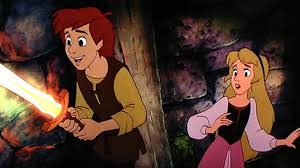
Before vanishing, the witches reveal that the cauldron remains indestructible, and that its power can only be broken by someone who climbs in under his own free will, which is likely to kill him. Although Taran feels foolish for aspiring to destroy the cauldron alone, his companions show their belief in him; and it seems that Eilonwy and Taran will kiss. Suddenly, the glorious reverie is broken when the Horned King's soldiers interrupt, having finally reached the marshes all by themselves. They seize the cauldron and everyone but Gurgi, and take their prisoners back to the castle. The Horned King uses the cauldron to raise the dead and his Cauldron-born army begins to pour out into the world.
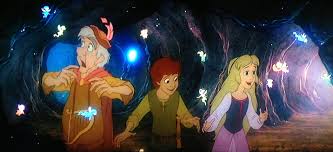
BLAH BLAH BLAH so you can see its a bit of a mixed bag of some of the source material and whatever Disney found compelling. So does it work? Well not for what it cost them. Reportedly it was made for 25 million, but figures say the number is closer to 40 million. It was met with a terrible series of negative reviews and the movie had to be cut because it was deemed too violent.
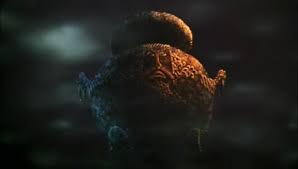 With their gums bleeding, Disney decided to cut the party short and it was years before the movie was released on VHS. It was in this second life in the Video and then DVD market that the movie finally received some much needed love.
 It was this cult following that has made the film linger in the minds of many fans of Animation. Personally I was always a fan of this movie and its more serious tone. The visuals have always been deemed as innovative yet a bit rough around the edges. To me its in the realm of Characters that has always left this movie wanting. Where the hell are they? There is no depth, interest, or growth in them. Nothing to make them interesting and nothing to make you care if they live or fall off a freaking bay.
 The film even has John Hurt as the villain and somehow manages to misuse him. Yet, there is a lot in the film to be happy about, at least for younger kids. I'd definitely watch it with a remote.
The Rescuers was the sole film that studio produced that seemed to bring in the kind of revue that Disney had once enjoyed. So some how it was decided to adapt The Black Cauldron from the book series The Chronicles of Prydain.
Now here is the summary and you tell me if this sounds like the kind of tale disney would usually produce
In the land of Prydain, Taran is an "assistant pig-keeper" on the small farm of Caer Dallben, home of Dallben the Enchanter. Dallben learns that the Horned King is searching for a mystical relic known as the Black Cauldron, which is capable of creating an invincible army of undead warriors, the “Cauldron Born”. Dallben fears the Horned King may try to steal his pig Hen Wen, which has oracular powers, and use her to locate the cauldron. Dallben directs Taran to take Hen Wen to safety; unfortunately, Taran's foolish daydreaming causes Hen Wen to be captured by the Horned King's forces.
Taran follows them to the Horned King's stronghold. Along the way, he encounters the small, pestering companion Gurgi, who joins Taran on his search. Taran leaves Gurgi to sneak into the castle and rescues Hen Wen, who flees, but all too soon he is finally captured himself and thrown into jail. A fellow captive, Princess Eilonwy, frees Taran as she is trying to make her own escape. In the catacombs beneath the castle, Taran and Eilonwy discover the ancient burial chamber of a king, where Taran arms himself with the king's sword. It contains magic that allows him to effectively fight the Horned King's minions and so to fulfill his dream of heroism. Along with a third prisoner, the comical, middle-aged bard Fflewddur Fflam, they escape the castle and are soon reunited with Gurgi.
Following Hen Wen's trail, the four stumble into the underground kingdom of the Fair Folk—a group of small fairy-like beings who reveal that Hen Wen is under their protection. When the cheerful, elderly King Eiddileg reveals that he knows where the cauldron is, Taran resolves to go destroy it himself. Eilonwy, Fflewddur, and Gurgi agree to join him and Eiddileg's obnoxious right-hand man Doli is assigned to lead them to the Marshes of Morva while the Fair Folk agree to escort Hen Wen safely back to Caer Dallben. At the marshes they learn that the cauldron is held by three witches—the grasping Orddu, who acts as leader; the greedy Orgoch; and the more benevolent Orwen, who falls in love with Fflewddur at first sight, which causes a frightened Doli to abandon the group. Orddu agrees to trade the cauldron for Taran's sword, and he reluctantly agrees, although he knows that to yield it will cost his chance for heroism.
Before vanishing, the witches reveal that the cauldron remains indestructible, and that its power can only be broken by someone who climbs in under his own free will, which is likely to kill him. Although Taran feels foolish for aspiring to destroy the cauldron alone, his companions show their belief in him; and it seems that Eilonwy and Taran will kiss. Suddenly, the glorious reverie is broken when the Horned King's soldiers interrupt, having finally reached the marshes all by themselves. They seize the cauldron and everyone but Gurgi, and take their prisoners back to the castle. The Horned King uses the cauldron to raise the dead and his Cauldron-born army begins to pour out into the world.
BLAH BLAH BLAH so you can see its a bit of a mixed bag of some of the source material and whatever Disney found compelling. So does it work? Well not for what it cost them. Reportedly it was made for 25 million, but figures say the number is closer to 40 million. It was met with a terrible series of negative reviews and the movie had to be cut because it was deemed too violent.
Subscribe to:
Posts (Atom)